

How To Repair Chipped Pottery
Footstep-by-pace process of performing a seamless repair on a chipped large Italian platter using the best commercially available materials including cementing, filling, painting, and glazing. This process can apply to chipped plate, chipped vase, basin, pitcher, figurine or any pottery, china or ceramic vessel.
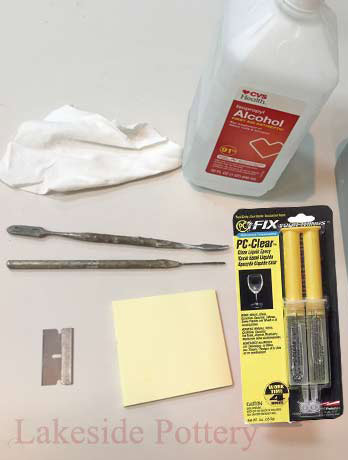
What Will You Demand | C ementing
1. Two-office clear 5 min Articulate epoxy
2. Wooden stick, or a pin-tool
3. A container with pvc pebbles or rice
4 . Razor blade
5. Denatured or 91% Booze
six. Paper pad to mix Epoxy on
vii. Skillful lite
viii. Protective eyewear
Where to get supplies
IMPORTANT: Ceramic restoration materials are not food-safe, liquid or heat-proof (over 190 degrees F) and repaired items should not exist used on cooking or food serving ware more than...
Cementing Ceramic Broken Pieces
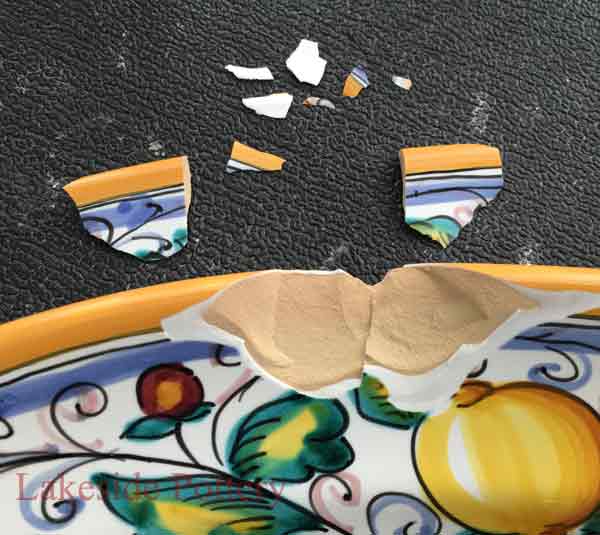
Make sure the pieces are make clean using alcohol. If the item has been stock-still before clean off whatsoever old agglutinative, or the new adhesive may not bond properly. Instruction to remove old adhesives.
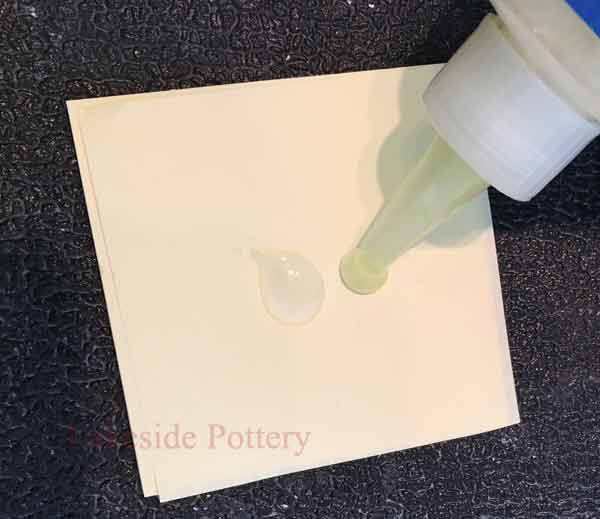
Place even amounts of 5-minutes clear epoxy on a paper or cardboard pad
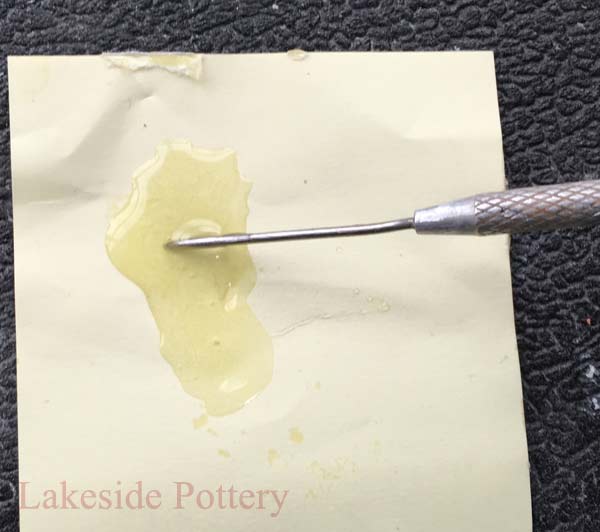
Mix epoxy well with a pin tool, newspaper clip or a wooden stick.
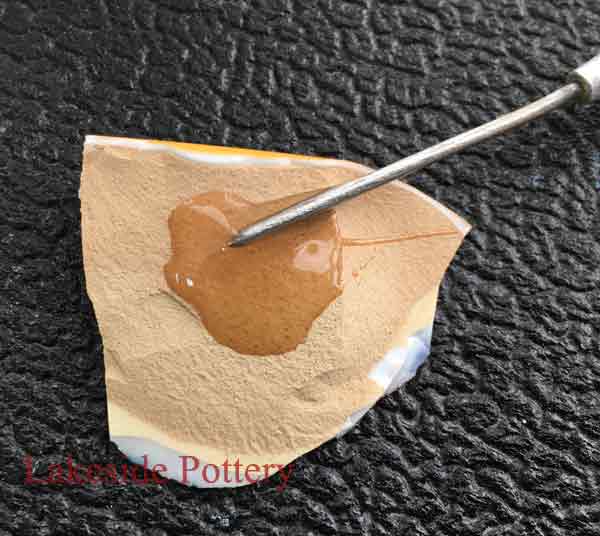
Apply epoxy mix to 1 side using a pintool or a wooden stick
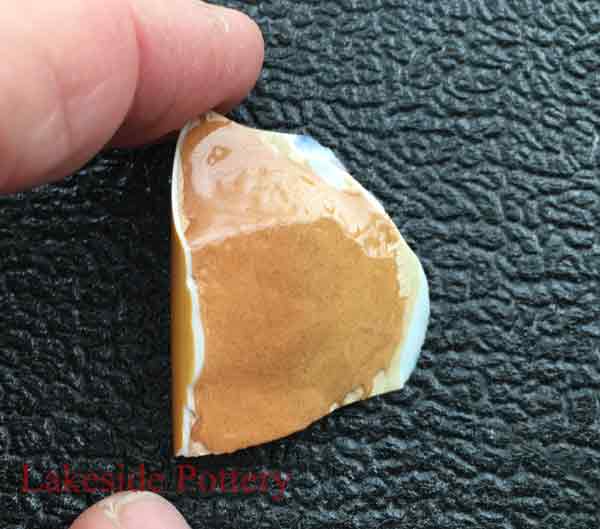
Apply only enough adhesive to embrace the edge. Likewise picayune will go out gaps, resulting in a weak repair
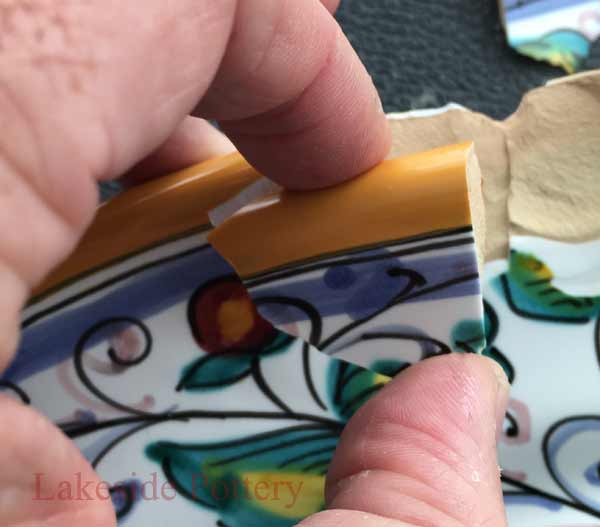
Place broken slice over the epoxy. Important: You have only about 60-90 seconds from start of epoxy mixing to complete the broken piece's permanent placement before the epoxy becomes gummy and not workable
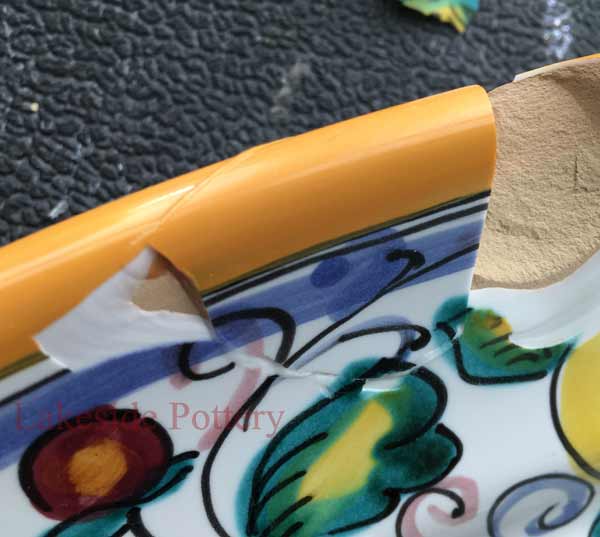
Quickly join the pieces together while applying light pressure level to squeeze actress epoxy out. Yous only have about 60–ninety seconds from start of epoxy mixing to placement before the epoxy becomes pasty and unworkable. Do not wipe off the squeezed-off epoxy to avert smearing.
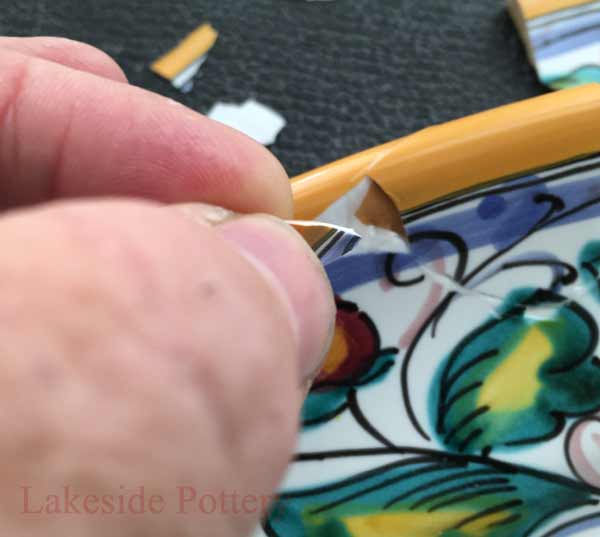
If your item is broken to more than than a couple of pieces, programme the zipper sequence to avert being left with a concluding piece that cannot be easily attached or fit in. Numbering the pieces afterward a dry run is a good thought and volition assist in the bodily implementation.
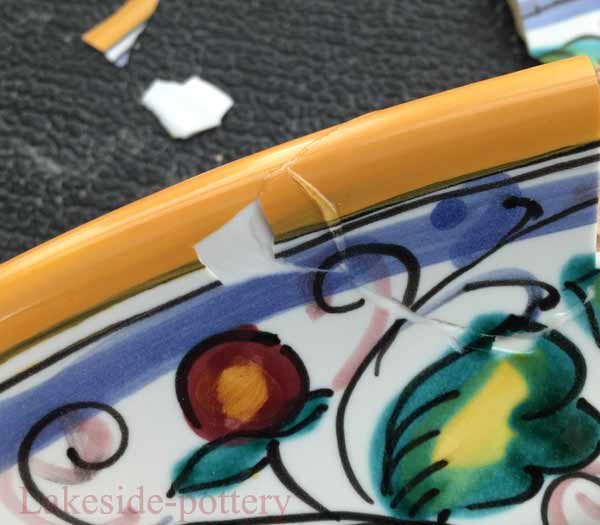
Verify that pieces tin stay steady during the cure period (permit information technology cure at 75 degrees F or warmer)
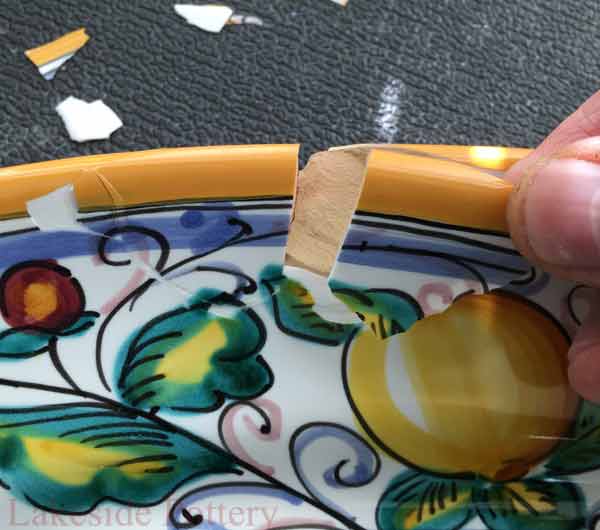
Verify fit with next piece. Immediately later applying the previous piece, if epoxy squeezes out into the adjacent piece space, make clean it with the pivot tool and booze to insure it volition non interfere with subsequent pieces proper fit
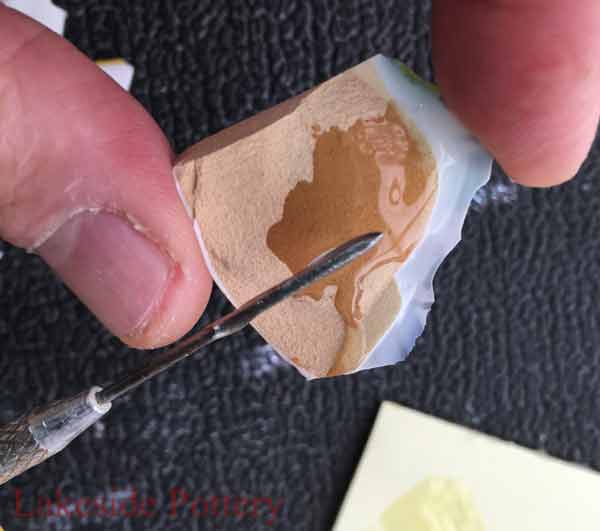
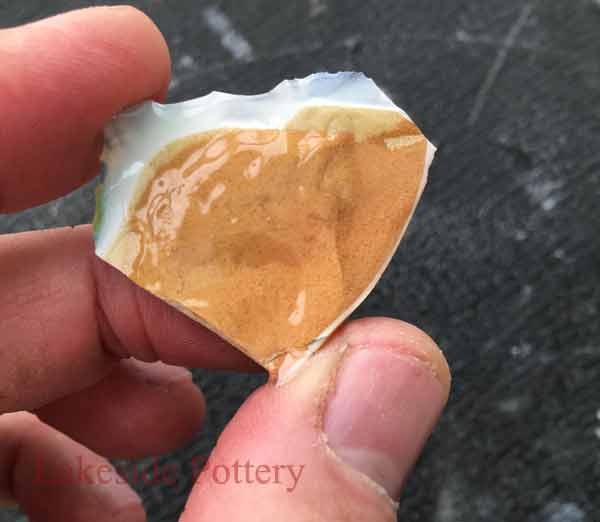
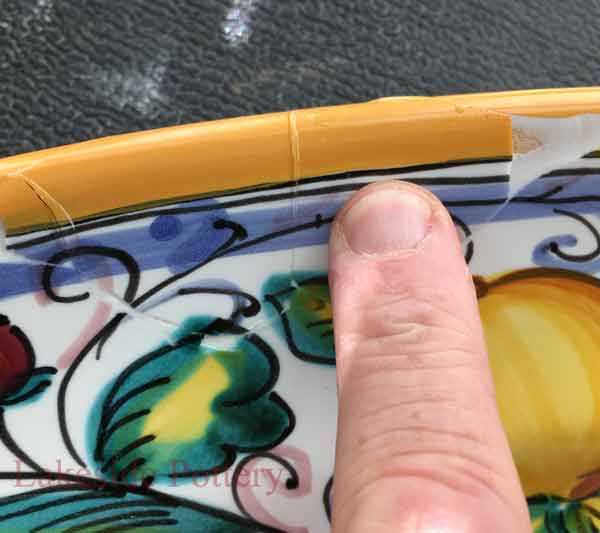
Push hard to squeeze out epoxy
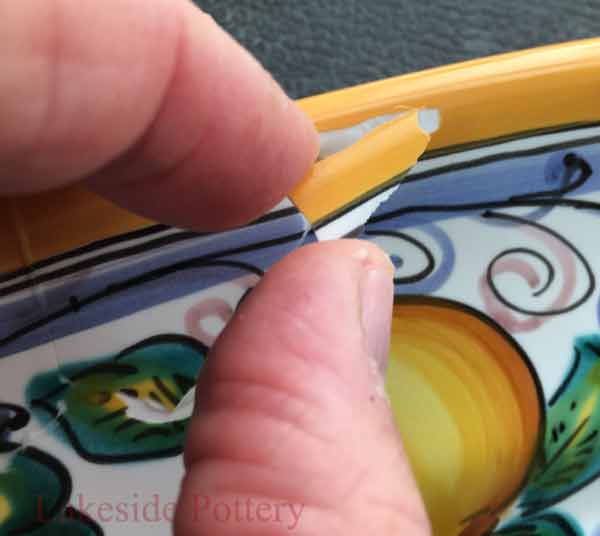
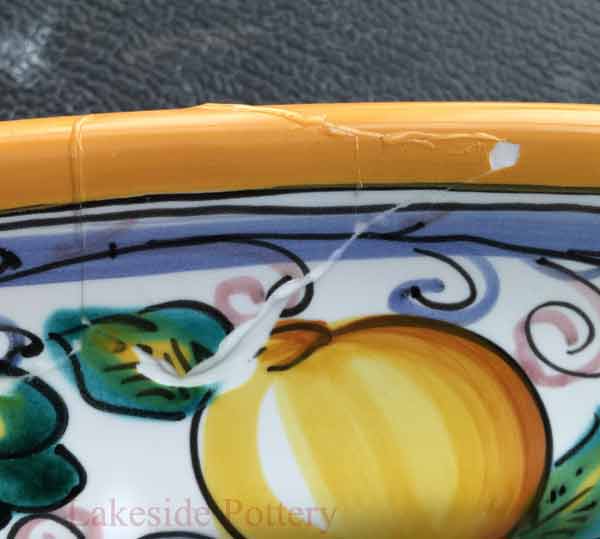
Wait 15-20 minutes before addressing the other side
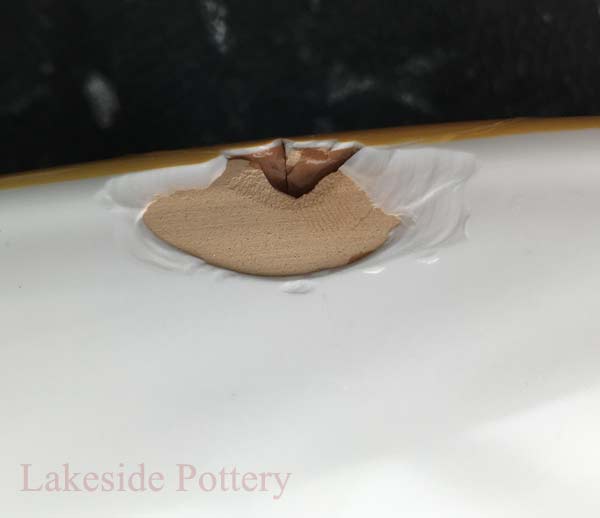
Other side remaining damage
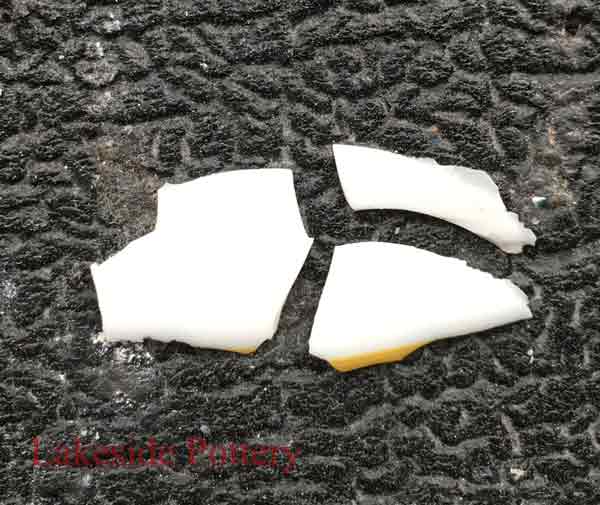
Rear side pieces
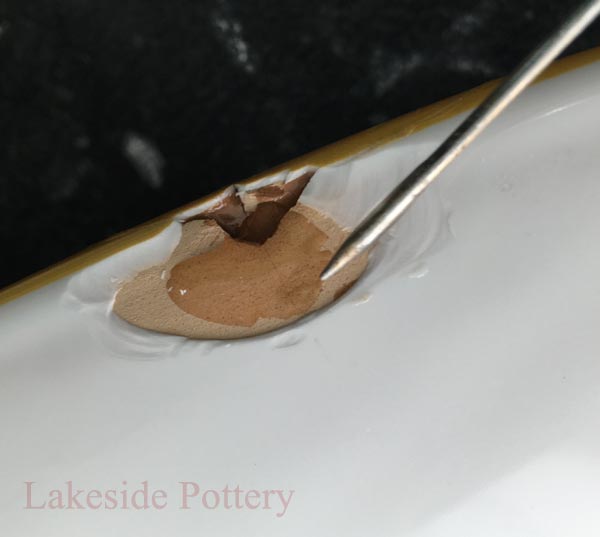
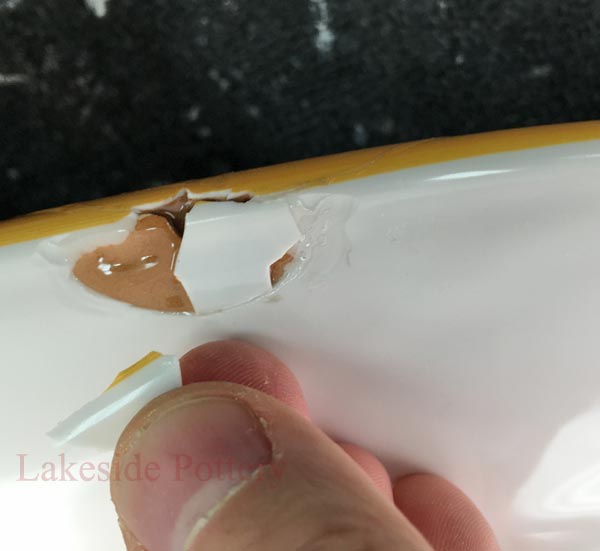
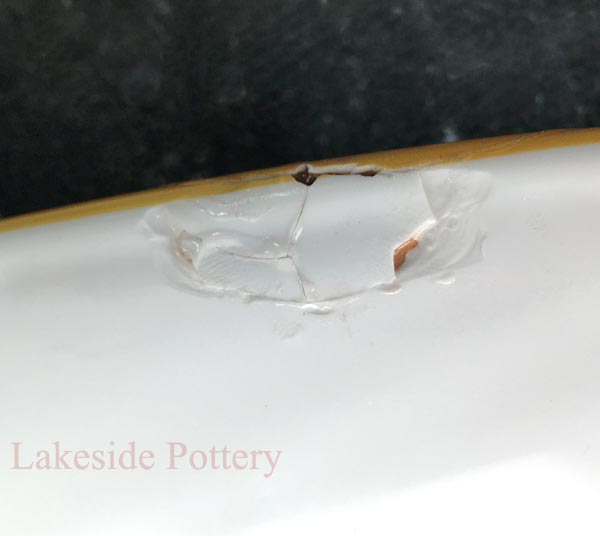
Wait ane-2 hours before clearing squeezed epoxy

Modest pieces are not used and tin can be thrown away
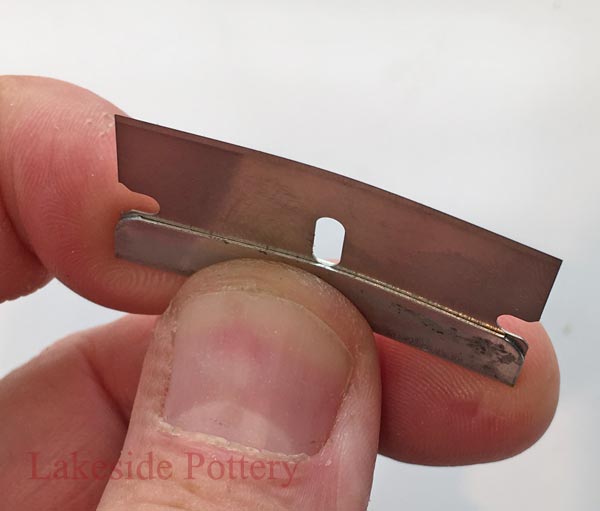
Bend blade for better access clearing unwanted cured epoxy. Warning - habiliment protective eyewear
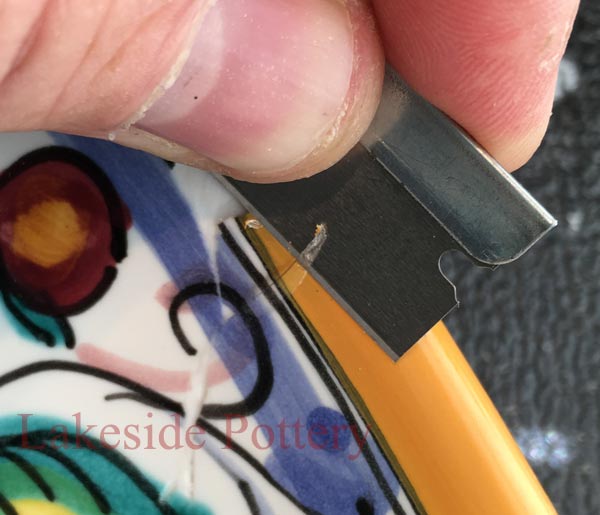
Let the epoxy cure for sixty or more minutes before removing excess cured epoxy with a blade
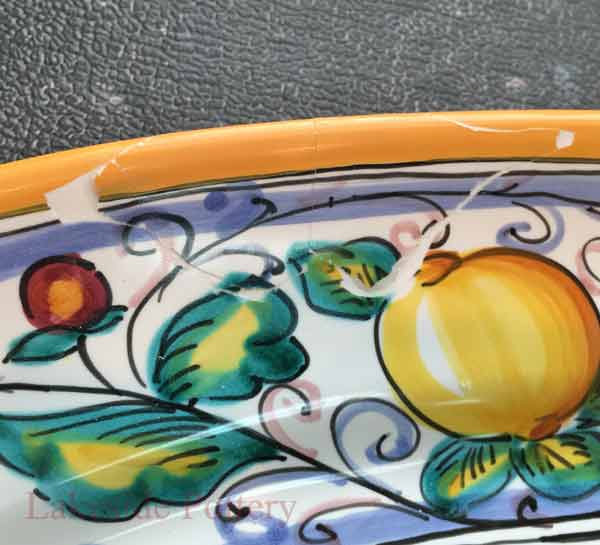
What You Will Demand | Filling and sanding
1. Two parts Epoxy filler PC-eleven
2. Dremel with EZ lock 120 grit disc
3. 220 grit sand paper
3. 400 grit sand paper
iv. Rag
v. Mini Spatula
6. Paper pad to mix Epoxy on
seven. Denatured or 91% Alcohol
Where to become supplies
IMPORTANT: Ceramic restoration materials are not nutrient-safe, liquid or heat-proof (over 190 degrees F) and repaired items should not be used on cooking or food serving ware more...
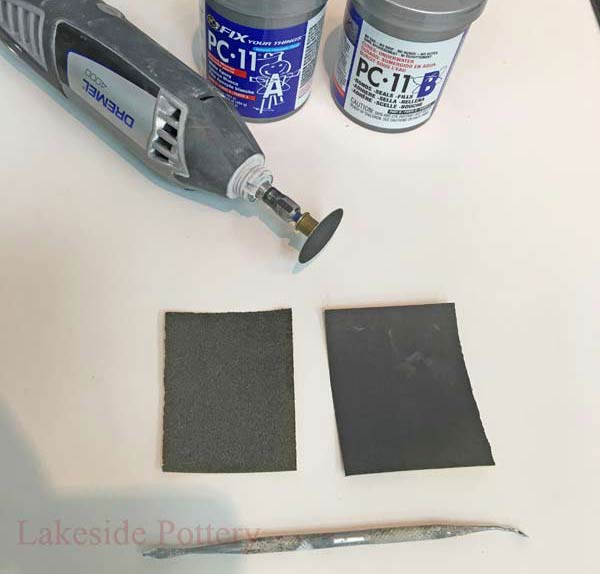
Filling, Sanding and Surface Preparation
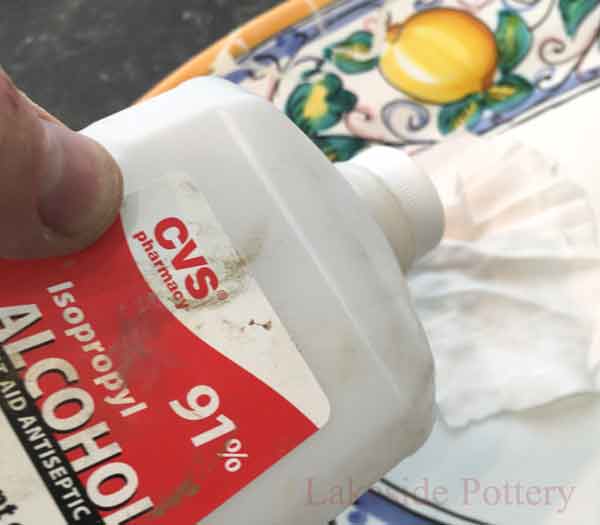
Wipe all surfaces with a 91% alcohol to remove dust and hand oils prior to applying filler epoxy
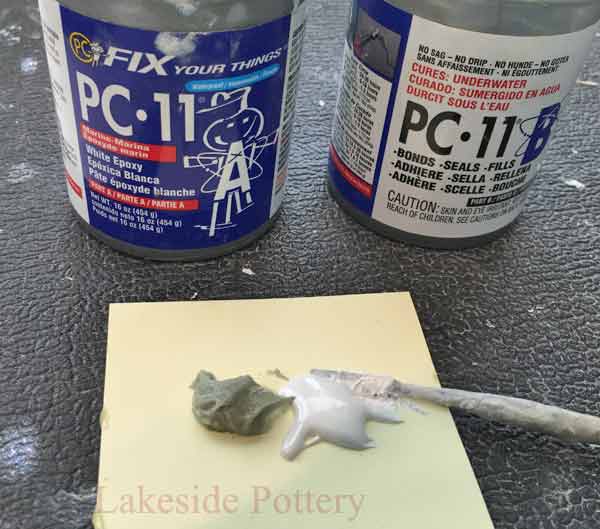
Mix even parts of PC-xi epoxy filler. For ease of application, work in room temperature of 75 degrees F or warmer. We identify the PC-11 in a small heater and go along it at 100 degrees F.
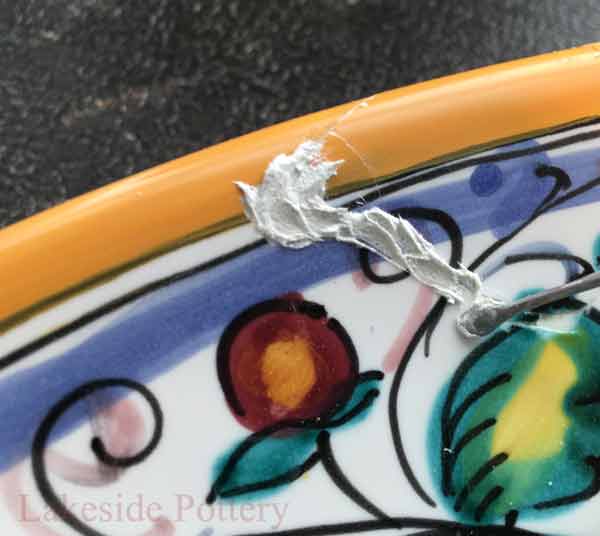
Apply thin layer of filler while pushing in to make full cracks and missing fragments
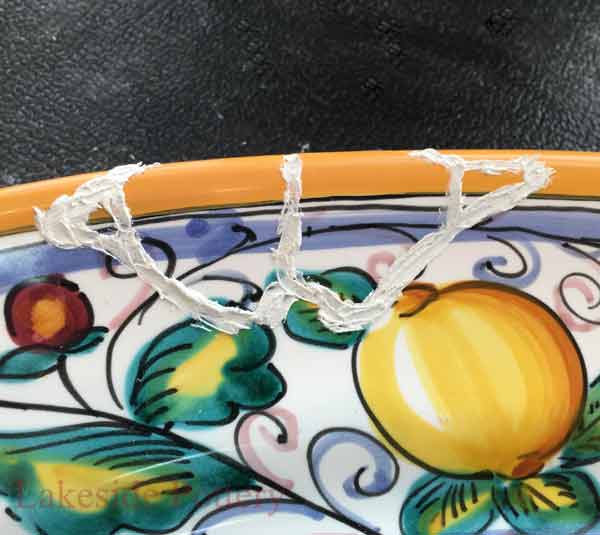
Let filler epoxy to cure for 12-24 hours (or longer) at a temperature of 75 degrees F or warmer. We identify our filled projects in a 140 degrees F oven over night.
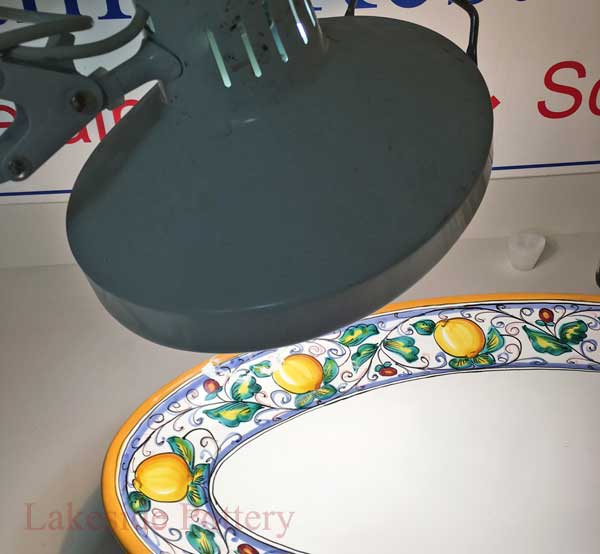
Placing under a lamp is some other proficient choice to optimize hardness for improve sanding performance. Place at to the lowest degree 12" abroad from repair item to avoid overheating.
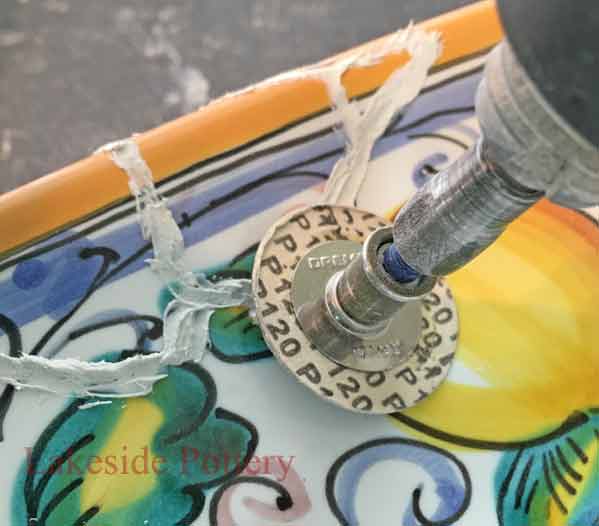
Utilise Dremel EZ lock sanding disc 120 grit for sanding.
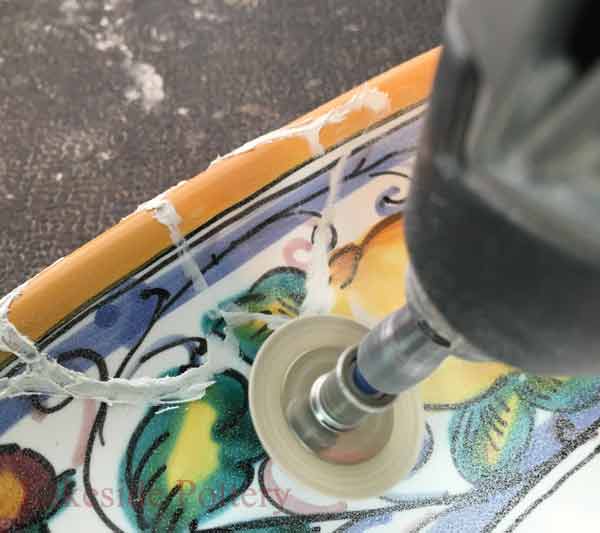
Employ low speed to avoid burn marks and apply light force per unit area. Leave the last 10% or and so for sanding by hand.
Warning - wear protective eyewear
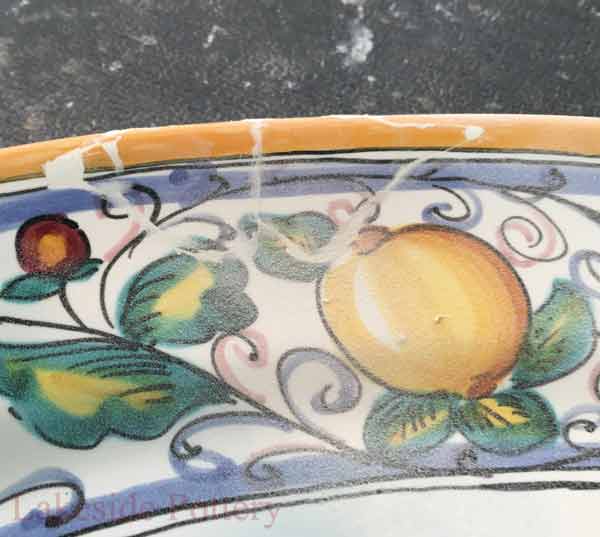
If Dremel is not available, sanding the whole task by paw (using grit 220 sandpaper) volition take longer but will yield the same results
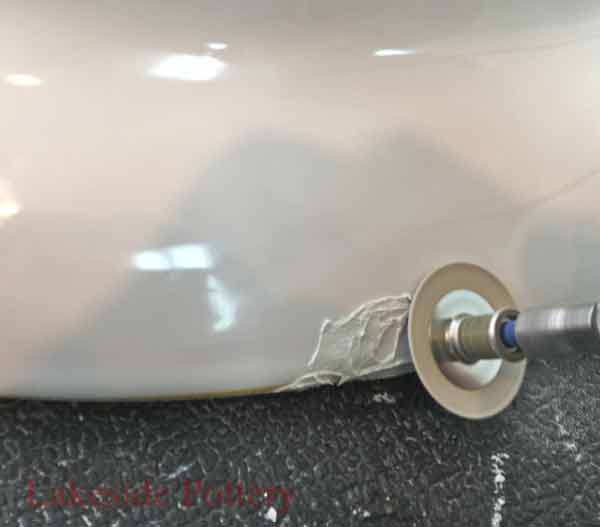
Repeat process on platter'due south other side
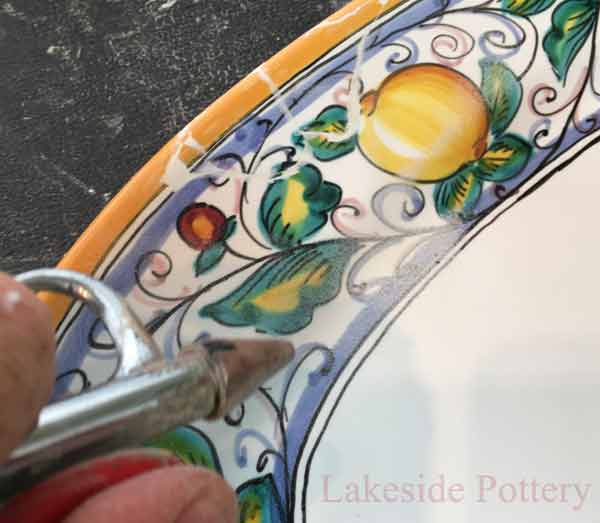

Go on sanding past manus using grit 220
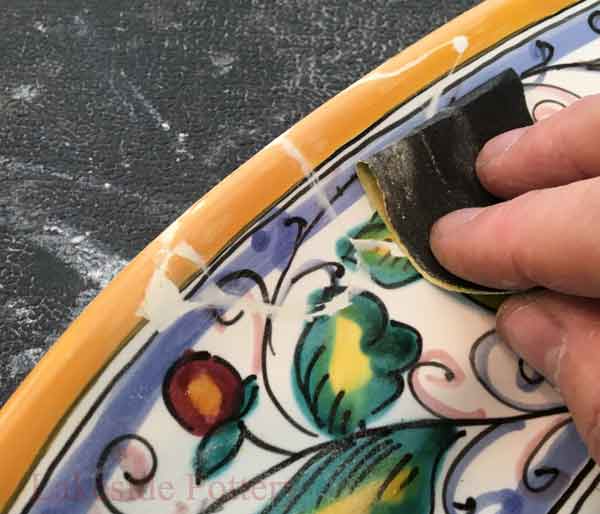
Apply long strokes for authentic surface continuity
If upon inspection, missed cracks are plant, echo the steps above for the selected areas
Utilise 91% alcohol for make clean up
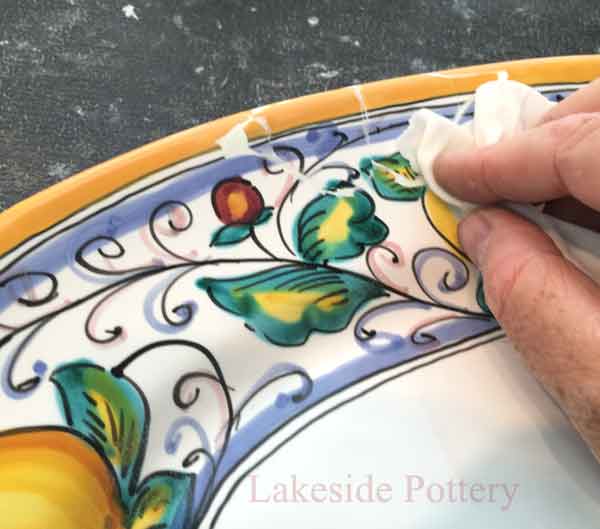
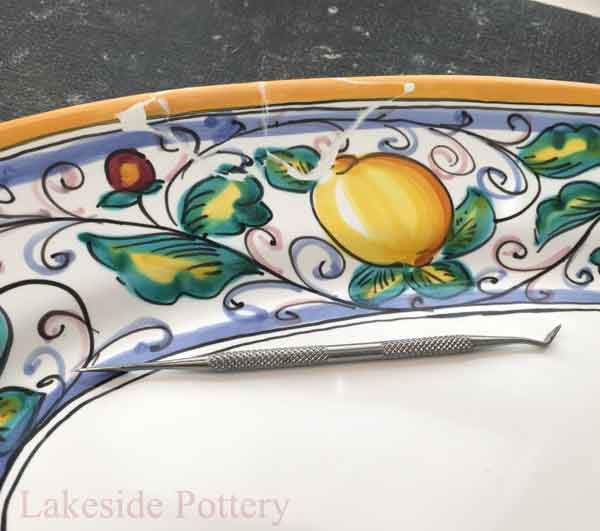
Afterwards the first round of sanding, a second finer filling is required using a small-scale sepulcher tool
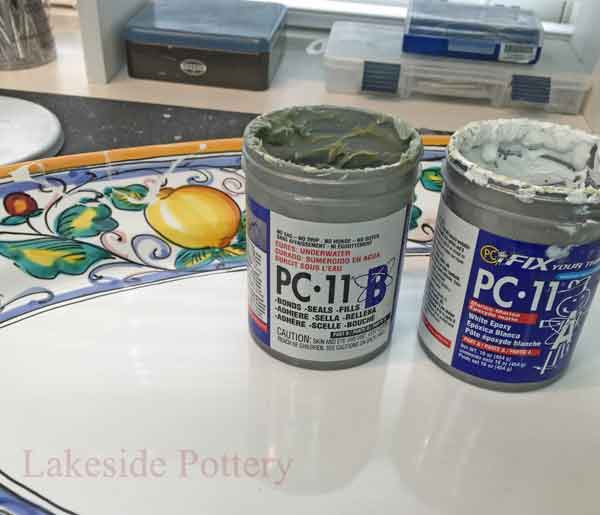
Same filler (PC-11) is used for second application
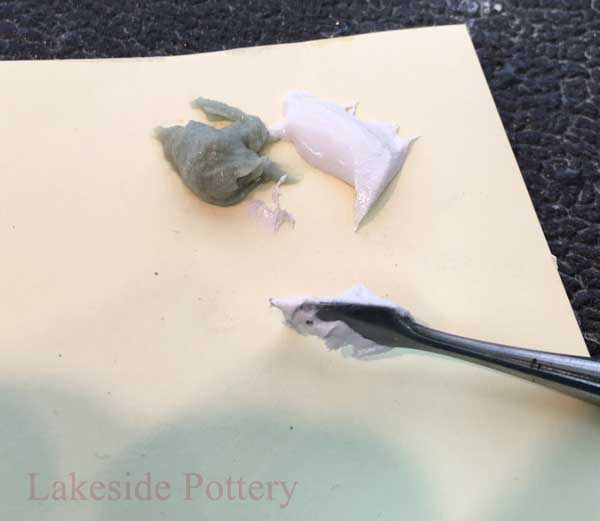
Mix well the epoxy filler two even parts
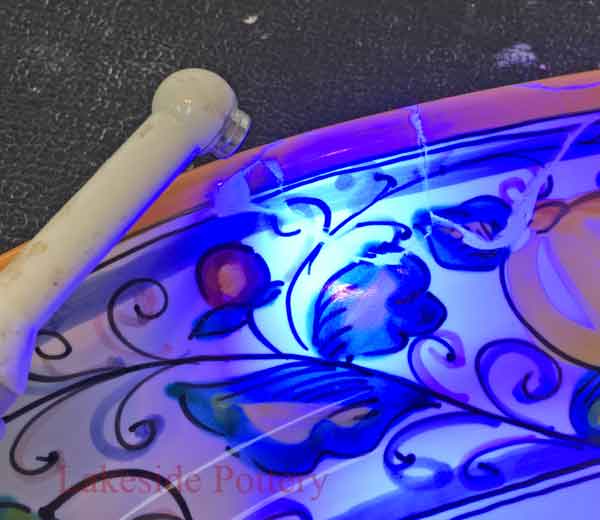
Inspect surface with UV low-cal or a spotlight for whatsoever surface defects (cracks, pits, pumps, etc.)
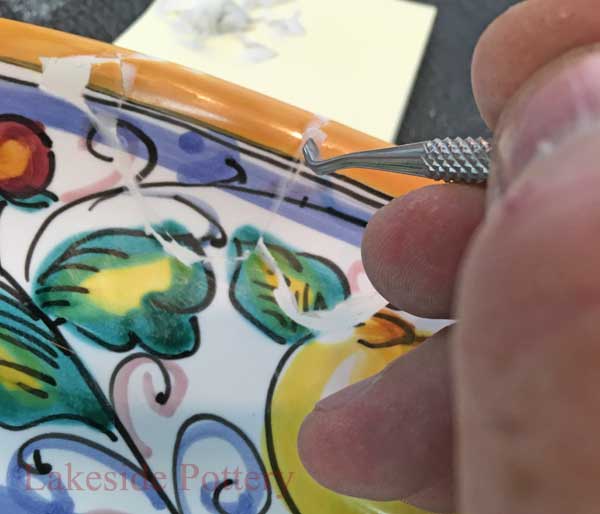
For seamless surface fill the defects with PC-xi lightly
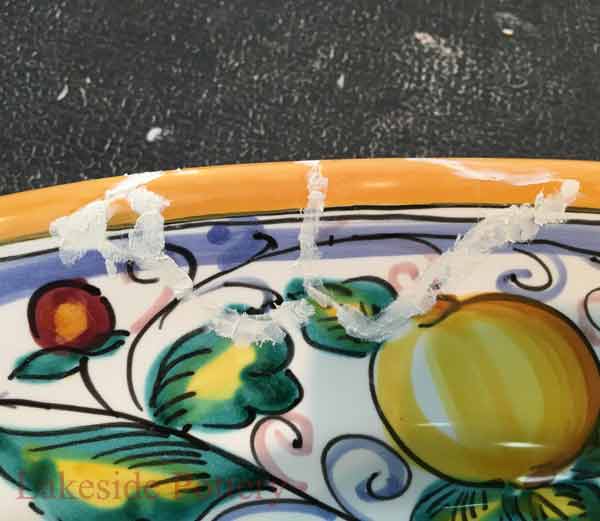
Wait for filler 2d layer to cure in a warm room (see more than above) before sanding
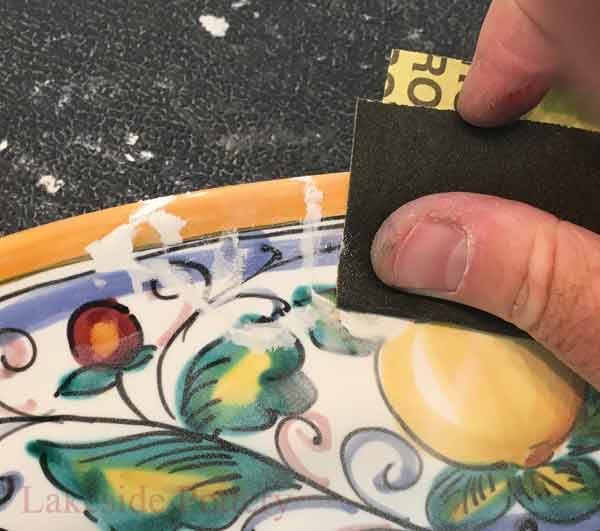
Sand 2d layer past hand with long strokes using dust 220, so dust 400 and finish with grit 3600. It may exist necessary to apply a third or fourth layer if UV / light close inspection reveals more surface defects
Wipe with booze for better paint bail
Painting and Glazing
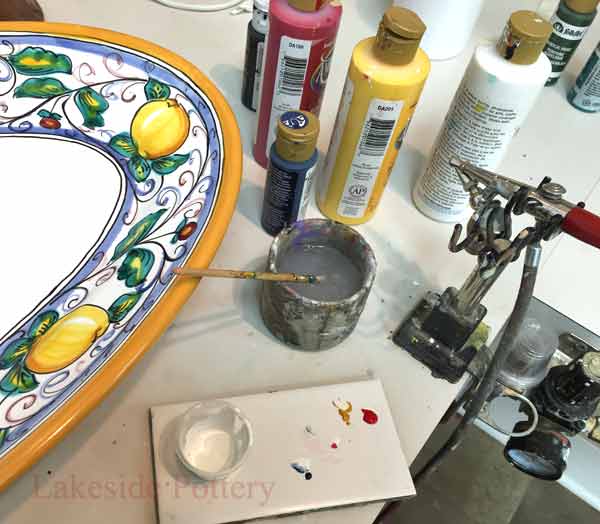
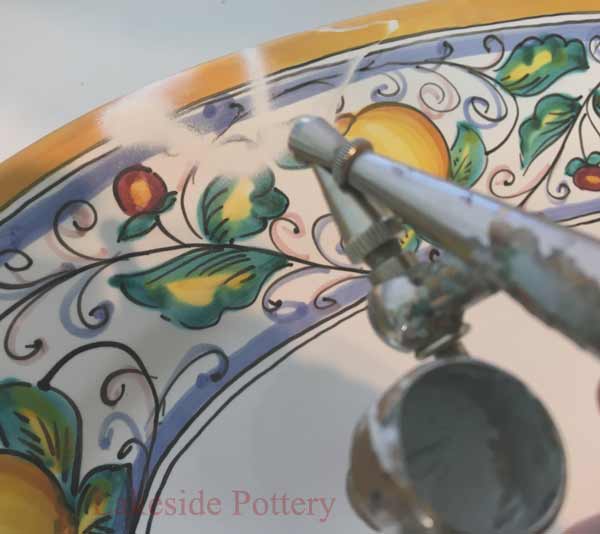
Airbrush over the repair line and taper off for shine color integration to original background glaze.
Painting over the repair line will erase painting details which will be replenished subsequently
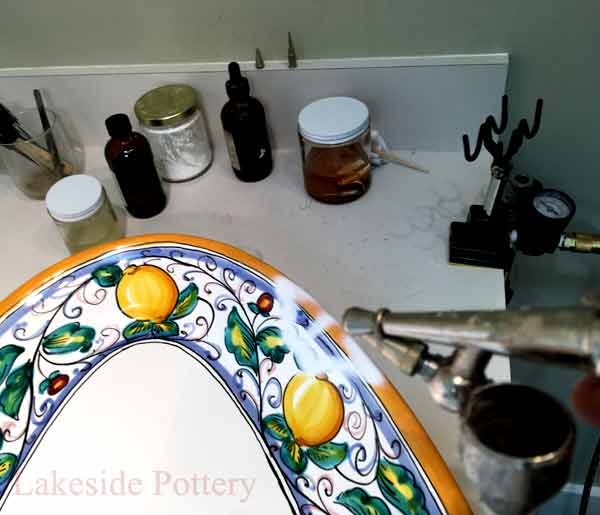
Wait a 24-hour interval or 2 for the acrylic paint to dry well and use thin layer of common cold glaze to protect the applied the painted areas.
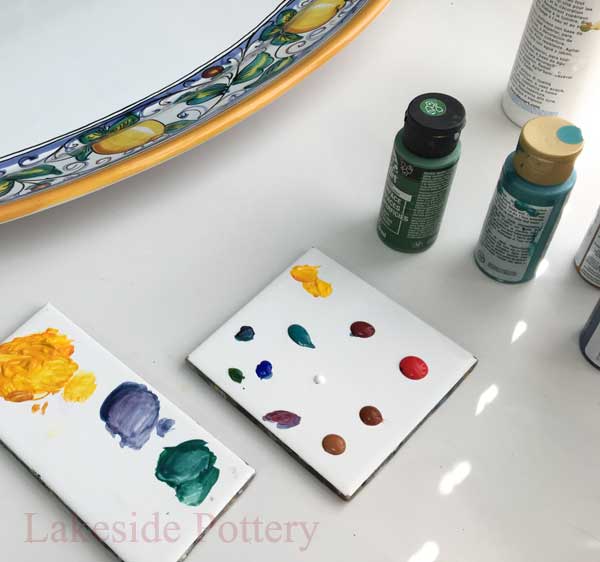
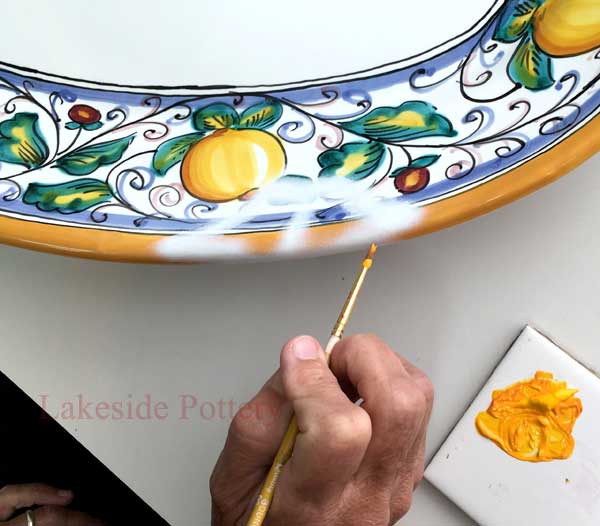
Utilise fine brushes to apply colors
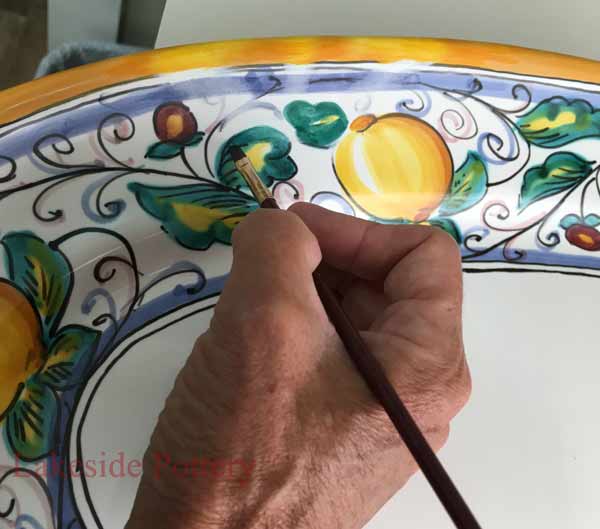
For translucent consequence, paint several coats of thinned paints
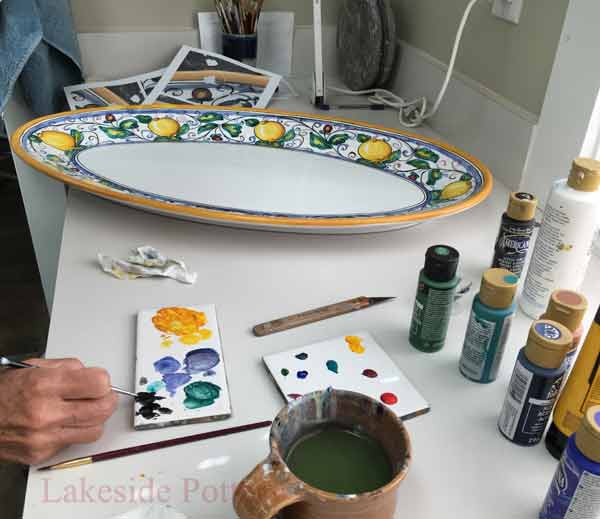
In this instance, employ black colour last
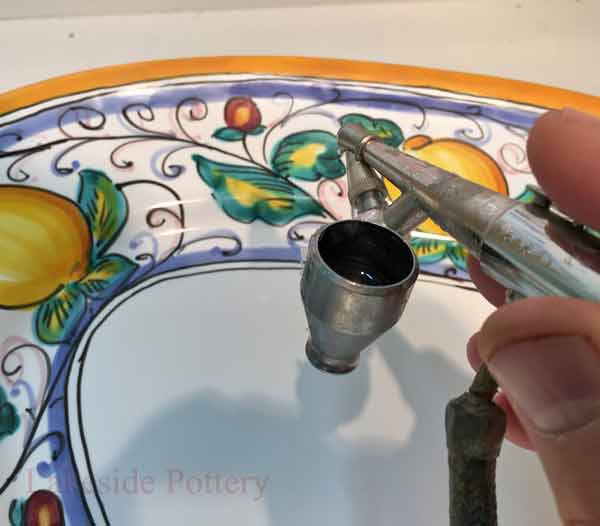
Wait for painting to properly dry out (a couple of days) and airbrush articulate glaze
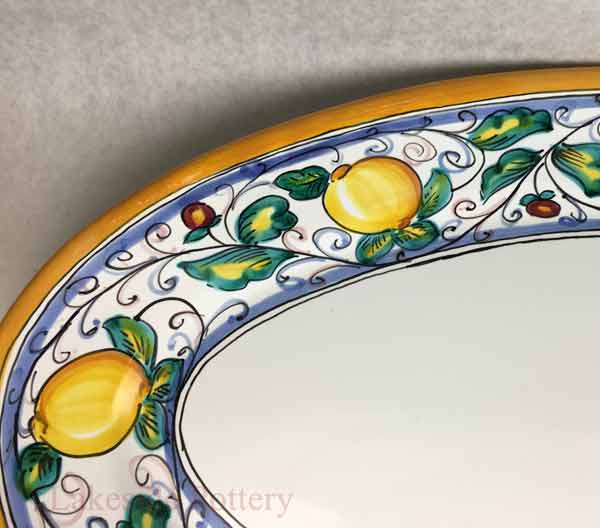
A 2d layer of clear glaze may exist required. Sand surface with a 3200 dust micro-mesh (later on waiting a 24-hour interval or two for 1st layer curing), wipe grit off and reapply common cold glaze
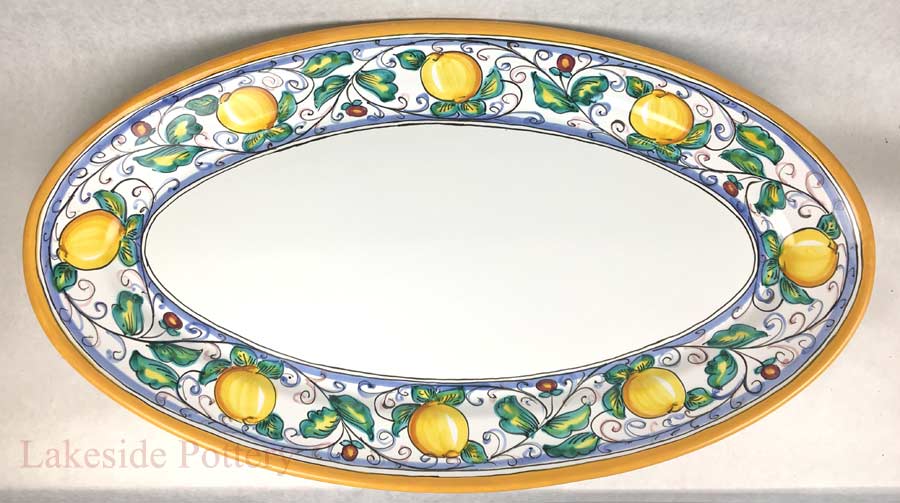
Platter ready for shipment
Remove old repair, Mend the broken segments, fill gaps, sand filler, paint and glaze the repaired areas.

Source: https://www.lakesidepottery.com/Pages/Pottery-tips/How-to-repair-chipped-pottery-china-ceramic-step-by-step.htm
Posted by: ferreirastittair.blogspot.com
0 Response to "How To Repair Chipped Pottery"
Post a Comment